
Chikankari kurti has become one of the standout pieces in India’s ethnic-wear wave this year. Suppose you’ve typed in “chikankari kurti for women” or searched “chikankari kurti online.” In that case, you’ve likely noticed how everywhere you look, this style is popping up—from boutique windows in Lucknow to Instagram stories and major e-commerce listings. What’s driving this surge? From the heritage craftsmanship of Lucknowi chikankari to modern silhouettes and comfortable fabrics like cotton and mul-mul, the fusion of tradition and everyday wear is key. In this article, I’ll walk you through the origin of chikankari, why the trend is exploding in 2025, the fabrics and styles worth investing in, how to style your chikankari kurti for work or weekends, where you can buy authentic pieces online, and how to care for them so they last. Whether you’re a longtime fan of ethnic wear or looking to add one meaningful kurti to your wardrobe this season, this guide is for you.
What is Chikankari? A Short History and Craftsmanship
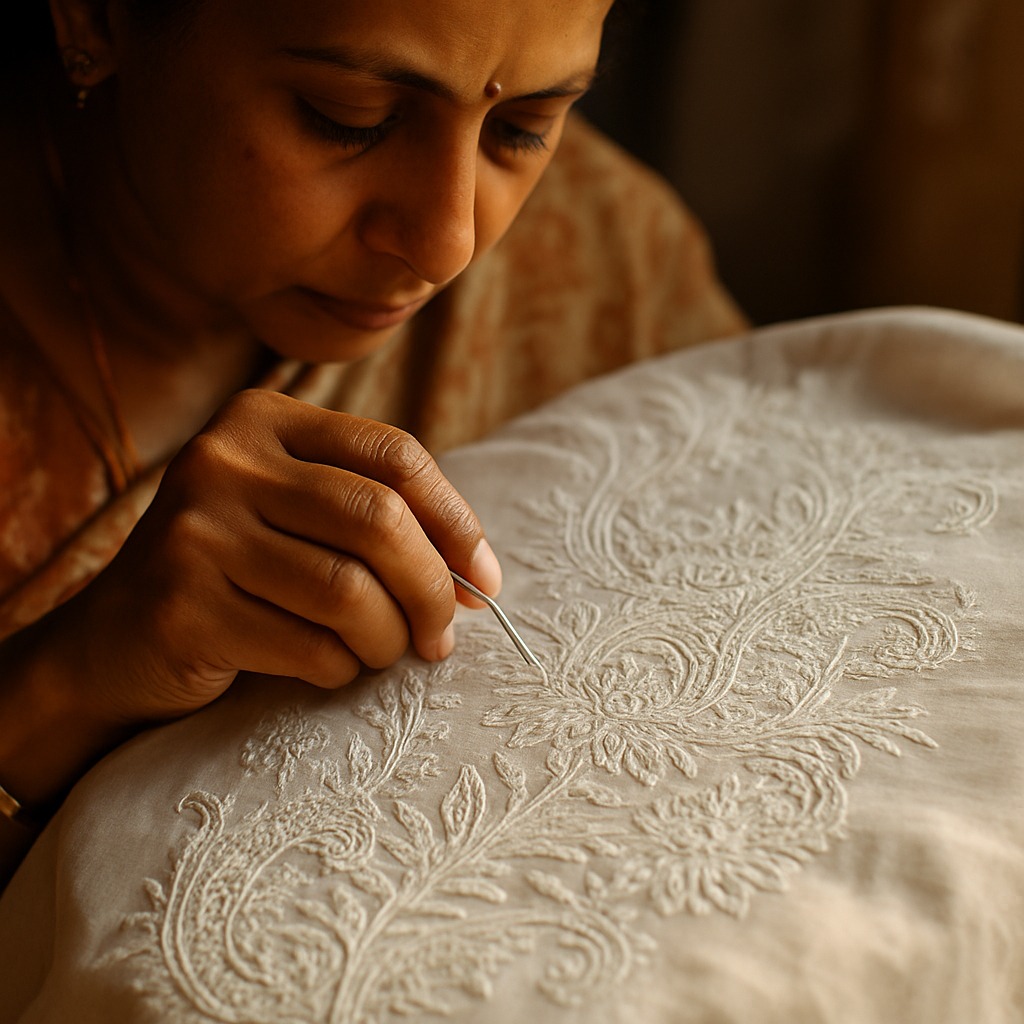
The term “chikankari” instantly evokes images of delicate white thread work on fine fabrics—but the story goes much deeper. Originating in the city of Lucknow, the craft of Lucknowi chikankari has its roots in the Mughal era. According to one research paper from Jetir, when the embroidery style evolved under the patronage of the Nawabs of Awadh, what started as an elite craft gradually became more accessible. Over the years, artisans introduced variations: from the traditional white-on-white motif to colored threads, shadow work, mukaish (metallic thread) accents, and different base fabrics. What remains constant is the hand-woven skill and the fine needlework that defines “chikankari.”
Today, despite mechanized production creeping in, many authentic pieces still carry hallmark signs of hand embroidery: uneven tiny stitches, soft fabric backing, and subtle motifs of paisley and floral vines. Recognizing these signs helps when you shop for genuine pieces rather than machine-made look-alikes.
Why Chikankari Kurti Became 2025’s Must-Have
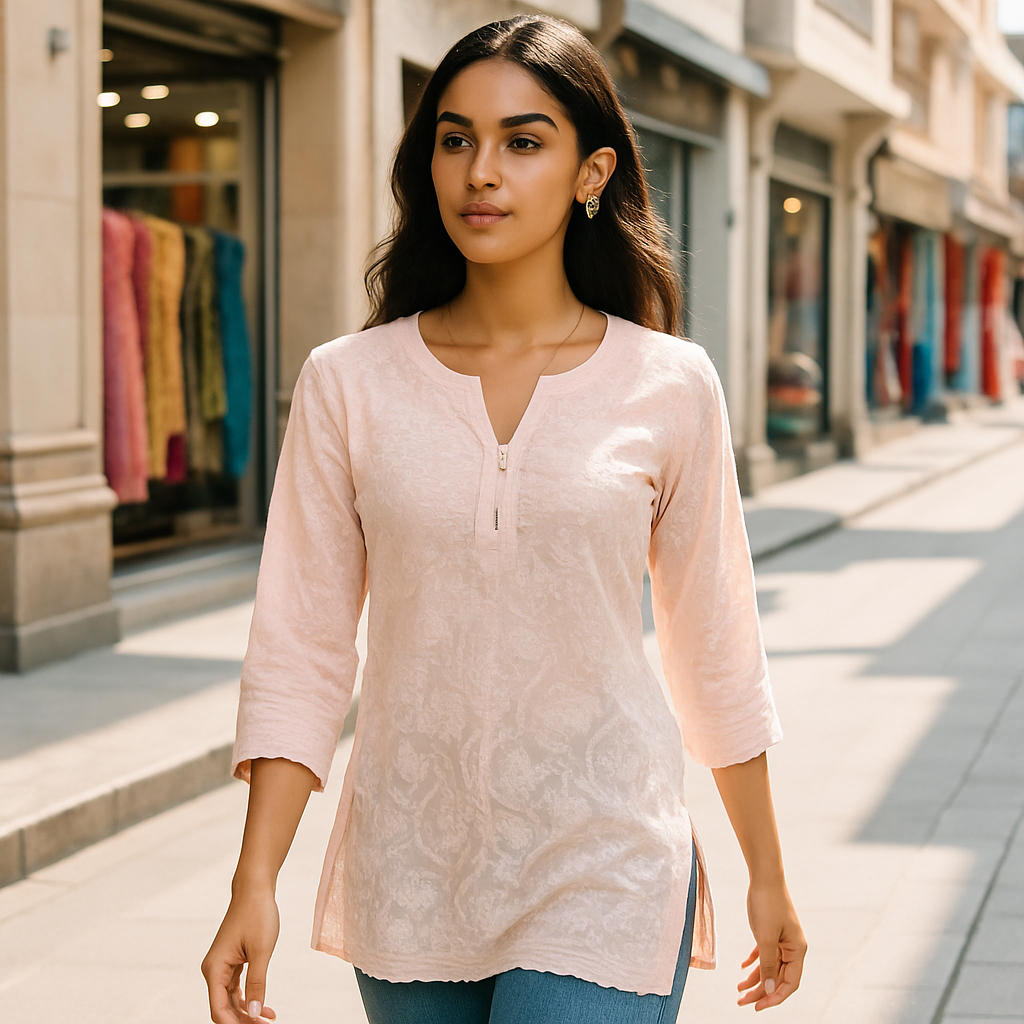
So why now? Why has the chikankari kurti gone from being a niche to being everywhere? Here are some reasons:
- First, in 2025, there’s broader recognition of regional crafts. A market report shows chikankari kurtis for women having one of the highest YoY percentage growths (~809%) in search volume.
- Second, with fashion consumers shifting toward comfortable yet elevated ethnic wear, the chic-meets-traditional look of chikankari fits perfectly. The report on the Kurtis market notes that “the resurgence of Chikankari embroidery” is driving fresh demand.
- Third, it blends versatility: You can wear a chikankari kurti for a casual office look, pair it with jeans for a weekend outing, or style it for a festive gathering. This crossover appeal makes it smart for both retailers and shoppers.
- Fourth, the online retail boom has made it easier to access authentic pieces beyond regional markets. With “chikankari kurti online” searches rising, the product is no longer limited to just boutiques in Lucknow or Delhi.
- Last, influencers and social media styling have played their part. When people see bloggers rocking a chikankari kurti with minimalist accessories or western bottoms, the style becomes aspirational and achievable both at entry and mid-price levels.
Fabrics & Styles: Which Chikankari Kurti to Pick
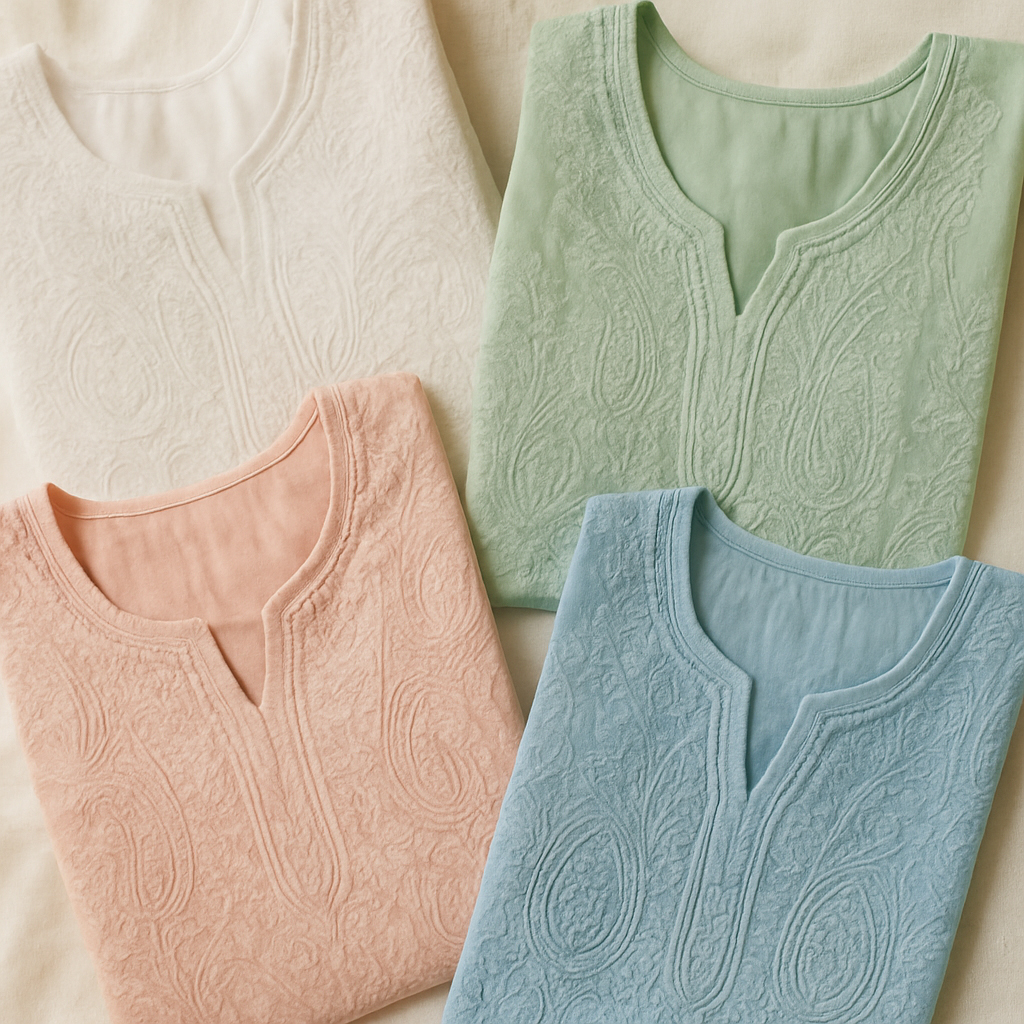
When selecting a chikankari kurti, the fabric and cut matter a lot. Here’s a quick breakdown:
- Cotton / mul-mul cotton: Ideal for everyday wear. Lightweight, breathable. If you want a “chikankari cotton kurti” for hot Indian summers, go here.
- Georgette/chiffon: More flowy, good for semi-formal or evening outings. The embroidery may be more pronounced.
- Silk / Chanderi silk: Premium price point; great for festive or wedding wear.
- Straight cut, A-line, and anarkali silhouettes: For daily casual, you could pick a straight kurti. For a more celebratory look, anarkali flare works.
- Length & sleeve variants: Short kurtis (above knee) are trendy for pairing with jeans or trousers; long kurtis give regal ethnic vibes. Look for designs labelled “chikankari kurti for office wear” if you want a look that transitions to work.
Also check authenticity clues: tight and consistent embroidery, finishing on the inside, and good fabric backing. Avoid pieces where the threads appear loose, the fabric is too thin, or the item is unstable.
How to Style a Chikankari Kurti—8 Outfit Ideas
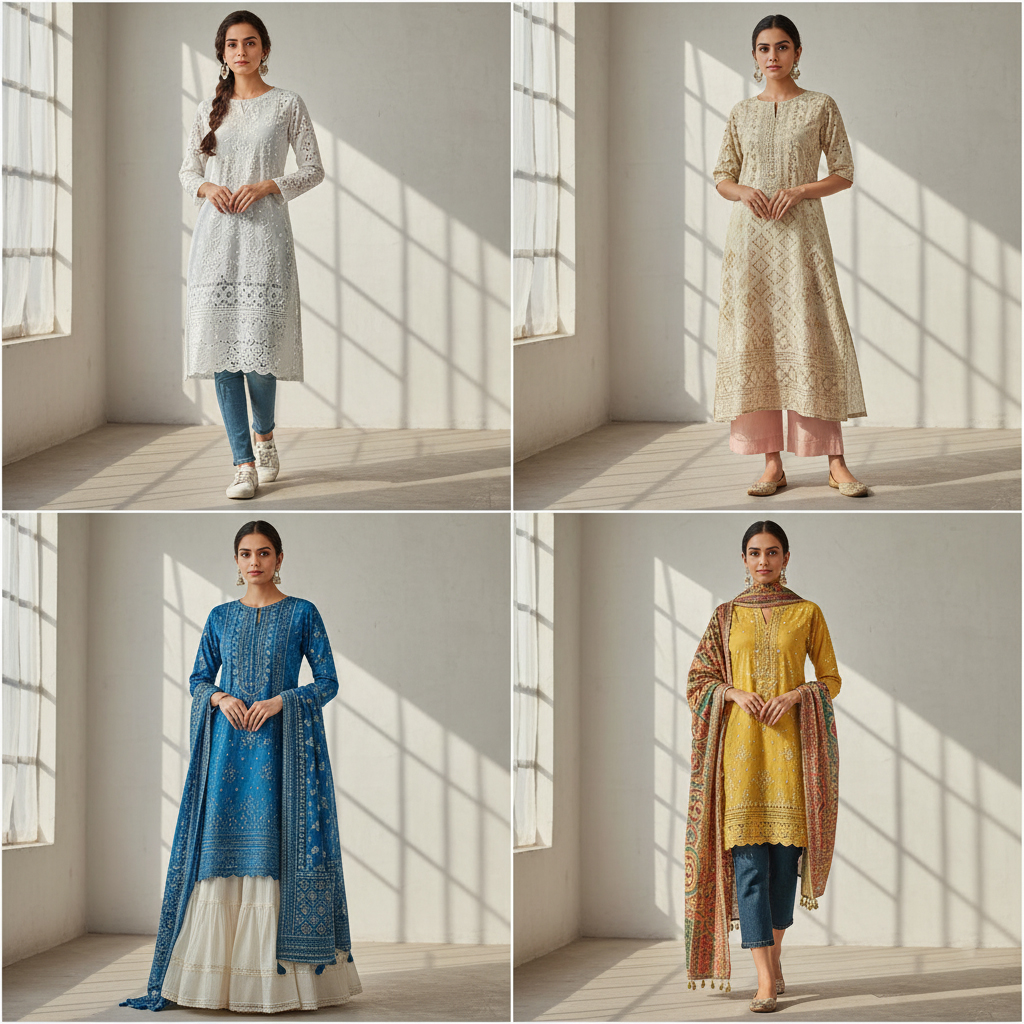
Here are eight outfit ideas that you can use for style inspiration:
- Pastel cotton chikankari kurti + white jeans + tan sandals = casual brunch look.
- Bold-colored (e.g., jewel tone) chikankari kurti + straight black trousers + simple jhumkas = office-nice.
- White chikankari kurti + light blue denim jacket + sneakers = weekend fusion.
- Mul-mul fabric chikankari kurti + palazzo pants + metallic flats = comfortable travel outfit.
- Silk chikankari kurti with subtle zari + standout dupatta + heels = festive/Diwali ready.
- Short chikankari kurti + cropped leather jacket + leggings = edgy ethnic-western mix.
- A-line chikankari kurti + dhoti pants + ethnic jutti = a more fashion-forward ethnic look.
- Layered: chikankari kurti under long shrug + jeans + statement earrings = layered smart casual.
Make sure to mix textures and keep accessories balanced; since embroidery is detailed, you don’t need heavy jewelry. Also, playing with color contrast (light kurti + dark bottom or vice versa) makes the embroidery pop.
Where to Buy—Online & Local
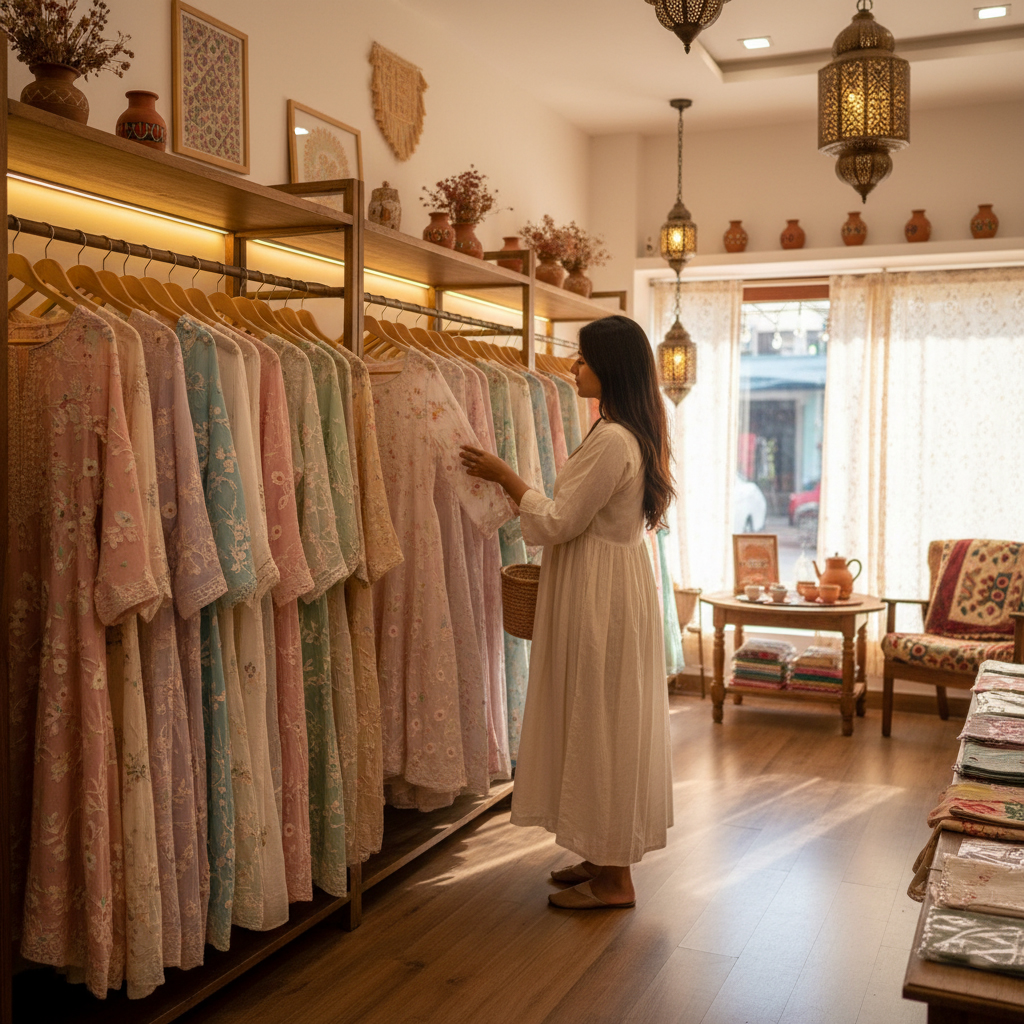
Given the growth of “chikankari kurti online” searches, here are shopping tips:
- Online marketplaces: Check flavors on major platforms, but filter for “hand-embroidered,” “Lucknowi origin,” and trusted seller ratings.
- Boutique/Regional sellers: Lucknow remains the heart of chikankari craft—pieces from local artisans often offer higher authenticity.
- Price pointers: Some data show chikankari kurtis price range between INR 1,200-3,500 for decent handwork pieces.
- Check return/exchange options, fabric pictures close-up, and stitching quality.
- For “buy chikankari kurti online,” ensure shipping & packaging protect the delicate embroidery.
- If you want local shopping, visit Lucknow markets or metropolitan boutiques that source directly from artisans.
Care, Maintenance & Longevity
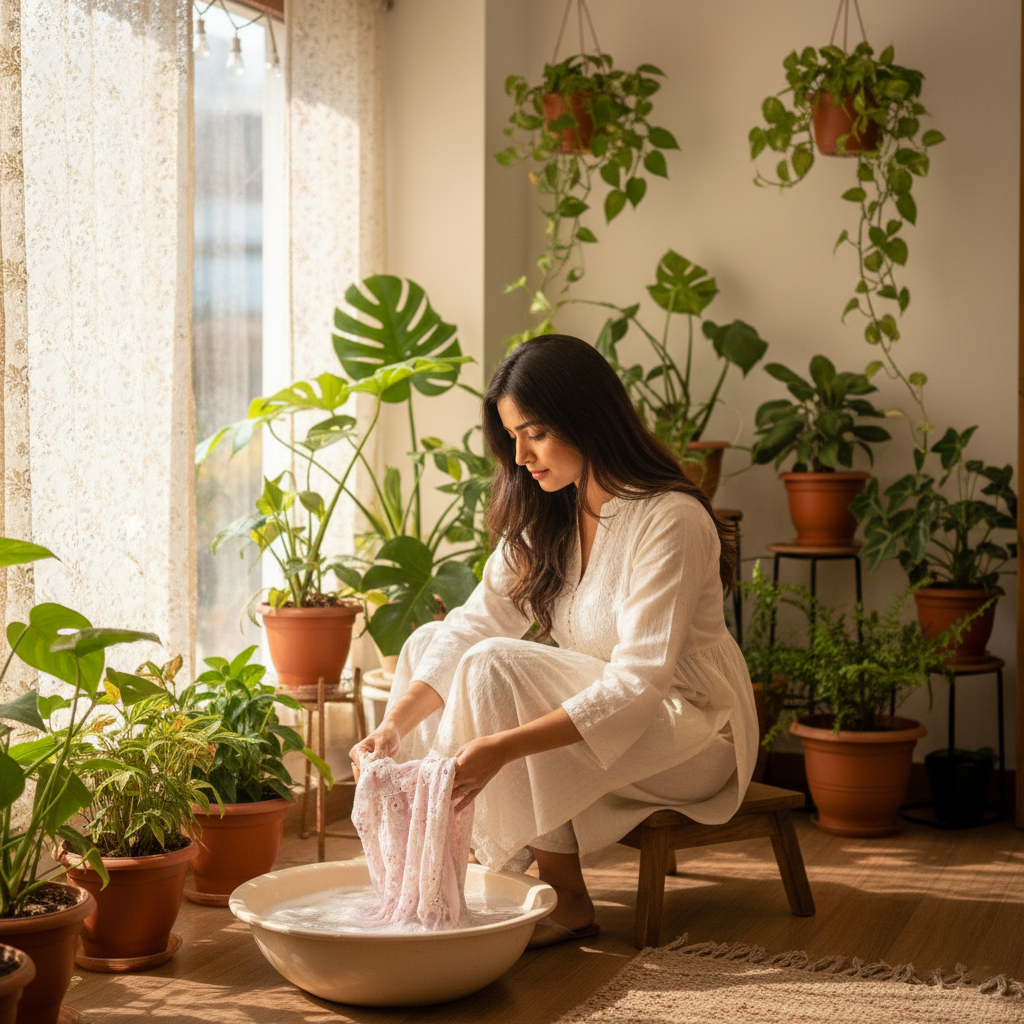
A beautiful “chikankari kurti” deserves proper care so it remains wearable for years:
- Prefer hand-washing in cold water with mild detergent; avoid harsh machines for fine embroidery.
- If printed tags say “dry clean only,” follow them—especially for silk or zari-embellished variants.
- Don’t wring the fabric; gently squeeze and dry in shade to avoid sun-fading of threads.
- Store folded with acid-free tissue paper inside to prevent creasing and color transfer; avoid hanging heavy embroidered kurtis for long.
- If a thread loosens, get it repaired early—a small fix prevents larger damage.
- Iron inside-out on low heat; place a cloth between the iron and the embroidery for safety.
FAQs
- Q1: What is a chikankari kurti? A kurti featuring traditional chikankari embroidery (needlework style) originating from Lucknow.
- Q2: How to spot real Lucknowi chikankari? Look for fine stitches, soft fabric backing, slight imperfections (a sign of handwork), and the “Lucknow” source if listed.
- Q3: Which fabric is best for summer? For hot weather, go for chikankari cotton kurtis or mul-mul cotton versions—breathable and light.
- Q4: How much does a good-quality chikankari kurti cost? Premium hand-embroidered pieces fall in approx INR 1,200-3,500 range according to market listings.
- Q5: Can I wear a chikankari kurti to the office? Absolutely—choose straight cuts, subtle colors, and minimal jewelry for a polished look.
- Q6: How to wash and care for a chikankari kurti? Hand-wash in cold water, avoid direct sun drying, store folded, and iron inside-out.
Conclusion
Let’s be honest—the Chikankari kurti isn’t just another fashion fling. It’s that reliable friend who looks good at brunch and at board meetings. It’s the soft-spoken kind of style that doesn’t scream for attention but quietly owns every room it walks into.
Think of it as a fashion investment—something your wardrobe will thank you for every time that “what to wear?” panic hits. If you choose the right fabric, embroidery, and fit—and give it a little love—it’ll last you longer than any fast-fashion piece ever could.
And if you’re someone running a small Chikankari label or any fashion business, here’s a tiny tip—presentation is everything. Whether it’s your e-commerce store or your own website, how beautifully and authentically you showcase your products can make or break your sales. That’s why top brands in Kolkata always hire the best advertising photographer in Kolkata to shoot their collections—because visuals are the real game-changer.
Ready to explore more? Click over to shop authentic pieces or browse my handpicked stores (link). And hey—if this guide made you smile, subscribe for more ethnic-wear stories, styling tips, and some real talk from India’s evolving fashion scene. 🌸✨